On March 28, 2016, six Senators and six members of the House of Representatives sent a letter to HHS Secretary Burwell and Director Collins at NIH, calling for an “open and transparent public hearing” to discuss the issues presented in… Continue Reading →
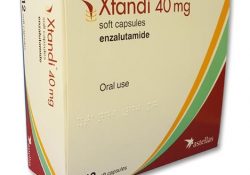
On Monday, March 7, 2016, Congressman Lloyd Doggett, D-Texas, issued a statement in support of the recent Knowledge Ecology International (KEI) and Union for Affordable Cancer Treatment (UACT) request that the National Institutes of Health (NIH) authorize the generic production of an expensive prostate cancer drug in order to curb an excessive and discriminatory price in the United States.
Continue Reading →
On March 4, 2016, KEI provided comments to the US Senate Committee on Finance on a report prepared by staff for Senators Grassley and Wyden that was issued by the committee on December 2015, titled “The Price of Sovaldi and Its Impact on the U.S. Health Care System.” Senators Grassley and Wyden asked the public to comment on various issues raised in the report. The comments we filed on March 4 included three major sections.
Continue Reading →
(An expanded, edited and better version of this is available in our March 4, 2016 reply comment to USTR, available here: https://www.keionline.org/node/2440)
These were my notes from my testimony for KEI at today’s USTR Special 301 hearing
Big market puts countries on the #special301 watch list
Continue Reading →
KEI intervention: TTIP Stakeholder events Round 12, Brussels (24 February 2016)
A Positive Agenda for TTIP – What we would like to see in the TTIP that would expand access to knowledge?
1) Marrakesh Treaty ratification
The TTIP should include an obligation to ratify and to implement the WIPO Marrakesh Treaty for Persons Who Are Blind for Otherwise Disabled, in order to expand access to accessible works to persons with disabilities in the European Union and the United States, as well as in other countries.
Continue Reading →
On February 8, 2016, the National Institutes of Health (NIH) responded to Knowledge Ecology International (KEI) and the Union for Affordable Cancer Treatment’s (UACT) letter requesting that the federal government exercise its authority under the Bayh-Dole Act to break patents on an expensive prostate cancer drug.
Continue Reading →
For more information on the 2021-2022 Xtandi request please visit: https://www.keionline.org/xtandi2021 (More on government funded inventions here.) On January 14, 2016, Knowledge Ecology International (KEI) and the Union for Affordable Cancer Treatment (UACT) submitted a request to the National Institutes… Continue Reading →
World Health Organization (WHO) Director-General Dr. Margaret Chan addressed civil society and policy-oriented “think tanks” on November 12, 2015, and “challenge[d]” them to “help with issues that keep me awake at night.” Specifically, she mentioned the problems with pharmaceutical patents, high drug prices as a barrier to access, and the current system of incentives for new drug innovation. Dr. Chan also raised concerns about the the TPP, which she said may raise drug prices and harm access to generics.
Continue Reading →
The negotiators have finally released, for the first time, TPP text, which is on the web here.
Despite assurances from the contrary by Australia and USTR, intellectual property is a covered asset subject to Investor State Dispute Settlement (ISDS):
Article 9.1: Definitions
For the purposes of this Chapter:
. . .
Continue Reading →
I was recently asked by OSF to write a two page document that described “what was wrong with the current system of funding R&D?” and to offer some “important ideas for change.” This was my two page submission.
What is wrong with the current system for funding R&D? What are the most important ideas for change?
(In two pages, for OSF meeting on drug development)
James Love
October 20, 2015
1. What is wrong with the current system for funding R&D?
Continue Reading →