Search Results for: car t
Notes from KEI’s testimony at today’s USTR Special 301 hearing
(An expanded, edited and better version of this is available in our March 4, 2016 reply comment to USTR, available here: https://www.keionline.org/node/2440)
These were my notes from my testimony for KEI at today’s USTR Special 301 hearing
Big market puts countries on the #special301 watch list
2016: AltraTech, KEI comments on NIH proposal for exclusive licenses for vitro diagnostics patents
Other KEI comments on NIH licenses are found here: /nih-licenses
February 22, 2016
Patrick McCue, Ph.D.
Senior Licensing and Patenting Manager
Technology Advancement Office
The National Institutes of Diabetes and Digestive and Kidney Diseases
12A South Drive
Bethesda, MD 20892
via email: patrick.mccue@nih.govDear Dr. McCue:
Equitable Access Initiative (EAI), 1st intervention
I am in a meeting of the Equitable Access Initiative (EAI), which is considering new ways of measuring development and/or health needs, in the context of the priority setting by donors. I am a member of the Expert Panel, and this was my intervention in the morning session:
The presentations by John McArthur and Dominik Zotti were excellent, and the work of the four expert groups is a very useful contribution for those struggling with the challenge of setting priorities for aid.
Obama Administration Recommends Senate Ratify Marrakesh Treaty for the Blind; Implementation Language Would Limit Exports

CONTACT: Zack Struver
zack.struver@keionline.org
+1 (202) 332-2670
Obama Administration Recommends Senate Ratify Marrakesh Treaty for the Blind; Implementation Language Would Seriously Limit Exports
NIH acknowledges KEI/UACT request to use royalty-free or march-in rights on Xtandi
On February 8, 2016, the National Institutes of Health (NIH) responded to Knowledge Ecology International (KEI) and the Union for Affordable Cancer Treatment’s (UACT) letter requesting that the federal government exercise its authority under the Bayh-Dole Act to break patents on an expensive prostate cancer drug.
Xtandi petition regarding Bayh-Dole remedies to excessive prices
For more information on the 2021-2022 Xtandi request please visit: https://www.keionline.org/xtandi2021 (More on government funded inventions here.) On January 14, 2016, Knowledge Ecology International (KEI) and the Union for Affordable Cancer Treatment (UACT) submitted a request to the National Institutes… Continue Reading
Xtandi 2016 March-In Request
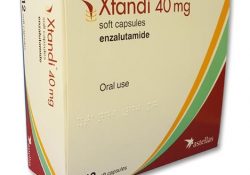
Today Knowledge Ecology International and the Union for Affordable Cancer Treatment (UACT) petitioned the Department of Health and Human Services, the Department of Defense, and the National Institutes of Health, asking that they exercise either their royalty-free, non-exclusive license or federal “march-in” rights to end the monopoly on an expensive prostate cancer drug, enzalutamide, marketed as Xtandi by Astellas, a Japanese pharmaceutical company.
Xtandi was invented at UCLA on federal grants from the NIH and DoD.
Knowledge Ecology International joins amicus brief on non-copyrightability of model laws and statutes
Washington, DC — On January 11, 2016, Knowledge Ecology International joined Public Knowledge and the American Library Association in an amicus curiae brief that argued that the contents of model laws, once enacted into statute, cannot be protected by copyright. The brief was filed with the U.S. District Court for the District of Columbia in the case of ASTM International v. Public.Resource.Org.
2016: 51 members of Congress have asked the NIH to use March-In rights to rein in high drug prices
This was the release from Representative Doggett’s office:
FOR IMMEDIATE RELEASE
January 11, 2016Contact:
Leslie Tisdale, (202) 225-4865
Over 50 Members of Congress to Obama Administration:
Help End Drug Price Gouging Now