Kite Pharma, Inc., which is racing Juno Therapeutics and Swiss pharmaceutical giant Novartis to successfully bring the first T-cell receptor (TCR) therapy to market, relies heavily on government support in the course of its research and development.
As noted previously by KEI, in various comments to the National Institutes of Health, the NIH rarely discloses detailed information on its connections with industry, raising concerns about how the NIH licenses out taxpayer-funded technologies without regard for future prices or access for U.S. residents.
For a selected bibliography of news stories on Kite’s relationship with the National Cancer Institute, see here: /node/2644.
T-cell receptor therapy is the latest breakthrough in cancer treatment, and involves modifying a patient’s own cells to better track and destroy cancer proteins, and then reintroducing them into the body. (The NIH has a concise description for non-scientists here.)
 |
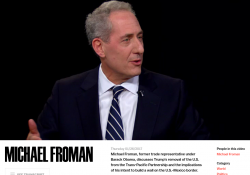
| Dr. Steven A. Rosenberg is the Principal Investigator for the National Cancer Institute on Kite’s 2012 CRADA. Dr. Rosenberg mentored Kite CEO and co-Founder Dr. Arie Belldegrun, and is also listed as a “Special Advisor” to Kite on their website. | Partnership for Public Service / Aaron Clamage
|
According to Kite’s filings with the Securities and Exchange Commission (SEC), Kite has secured three Cooperative Research and Development Agreements (CRADAs) with the National Cancer Institute (NCI). In exchange for quarterly cash payments, the NCI conducts clinical trials and laboratory work on many of its own patented technologies, with the understanding that Kite will have the rights to commercialize any successful products developed through the CRADA.
Continue Reading →