Government Funded research
2016: NIH license on patents on 5T4 Antibodies for cancer treatment, diagnostics, to Ovensa, located in Ontario, Canada
(More on government funded inventions here. Other KEI comments on NIH licenses are found here.) These are the April 17, 2016 KEI comments on the NIH proposed exclusive license to Ovensa, for patents on 5T4 antibodies for cancer treatment and… Continue Reading
2016: Objection to exclusive license to AestasRx Inc.
(More on government funded inventions here. Other KEI comments on NIH licenses are found here.) Susan Ano, Ph.D., NINDS Technology Transfer, 31 Center Drive, Suite 8A52, MSC2540 Bethesda, MD 20892; Telephone: (301) 435-5515; anos@mail.nih.gov Dear Dr. Ano, I am writing to express… Continue Reading
2016: Midissia Therapeutics license of NIH owned breast and prostate cancer vaccine patents
(More on government funded inventions here. Other KEI comments on NIH licenses are found here.) Sabarni K. Chatterjee, Ph.D., M.B.A. Senior Licensing and Patenting Manager, NCI Technology Transfer Center, 9609 Medical Center Drive, RM 1E530 MSC 9702, Bethesda, MD 20892-9702… Continue Reading
Xtandi March-in Request, links to news stories, blogs
Sanofi $9.3 Billion Medivation Bid 28 April 2016. Ben Hirschler and Leigh Thomas. Sanofi launches $9.3 billion fight for U.S. cancer firm Medivation. Reuters. 28 April 2016. Helen Thomas. Sanofi / Medivation: Deal-Making Déjà Vu Comes With Added Competition. WSJ.… Continue Reading
Bicameral letter from 6 Senators and 6 members of the House to NIH
On March 28, 2016, six Senators and six members of the House of Representatives sent a letter to HHS Secretary Burwell and Director Collins at NIH, calling for an “open and transparent public hearing” to discuss the issues presented in… Continue Reading
Xtandi petition regarding Bayh-Dole remedies to excessive prices
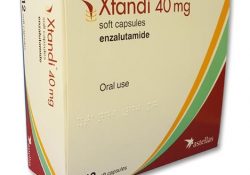
For more information on the 2021-2022 Xtandi request please visit: https://www.keionline.org/xtandi2021 (More on government funded inventions here.) On January 14, 2016, Knowledge Ecology International (KEI) and the Union for Affordable Cancer Treatment (UACT) submitted a request to the National Institutes… Continue Reading
Xtandi 2016 March-In Request
Today Knowledge Ecology International and the Union for Affordable Cancer Treatment (UACT) petitioned the Department of Health and Human Services, the Department of Defense, and the National Institutes of Health, asking that they exercise either their royalty-free, non-exclusive license or federal “march-in” rights to end the monopoly on an expensive prostate cancer drug, enzalutamide, marketed as Xtandi by Astellas, a Japanese pharmaceutical company.
Xtandi was invented at UCLA on federal grants from the NIH and DoD.
2016: 51 members of Congress have asked the NIH to use March-In rights to rein in high drug prices
This was the release from Representative Doggett’s office:
FOR IMMEDIATE RELEASE
January 11, 2016Contact:
Leslie Tisdale, (202) 225-4865
Over 50 Members of Congress to Obama Administration:
Help End Drug Price Gouging Now
Patents with government interests, by disease, 2010 to 2013
The attached PDF file provides counts on the number of patents with various search terms in the specification (spec/”search term”), and the number of those patents that declare either government rights in the patents (govt/government), an assignment to the US government (an/”united states of america”), or both. The complete counts are in the PDF file. The queries were done by Claire Cassedy on December 5, 2014.